AI for Executive Meetings: How Managers Turn Unproductive Gatherings into High-Impact Decisions
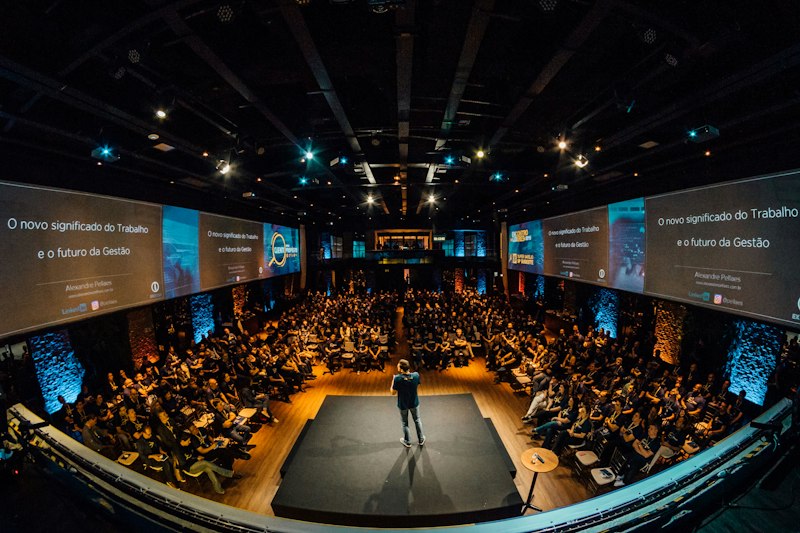
AI-powered executive meetings represent one of the biggest opportunities to reclaim leadership time in 2026. According to data from the McKinsey Global Institute, mid-level managers spend an average of 23% of their workday in meetings, and only 37% of that time produces actionable decisions. Artificial intelligence is radically changing this equation.
Definition: AI-powered executive meetings are leadership sessions in which artificial intelligence systems automatically prepare the agenda, transcribe and analyze the conversation in real time, identify commitments and risks, and generate structured minutes with defined owners and deadlines, without any manual effort from the manager.
For managers who still believe their meetings are inevitably long and unproductive, the experience of organizations already using these tools proves otherwise. The pattern is consistent: less manual preparation, more quality decisions, and teams that know exactly what to do when they leave each session.
Why executive meetings without AI are a systemic problem
A 2025 Gartner study reveals that 71% of employees feel they attend more meetings than necessary, and that 65% of those meetings lack a structured agenda. The result is predictable: decisions made twice, commitments that get forgotten, and leadership time that dissolves into circular conversations.
The problem isn't the meeting itself, but the absence of intelligent infrastructure around it. A manager running four meetings a week spends roughly three additional hours on preparation, note transcription, and tracking agreements. That adds up to more than 150 hours a year devoted to administrative work that an AI agent can execute in minutes.
Forrester Research documented in its report The Future of Executive Collaboration (2025) that organizations integrating AI into their meeting workflows report a 41% reduction in post-meeting follow-up time and a 28% increase in the completion of commitments made during sessions.
The high-performance AI stack for executive meetings
Managers who have transformed their meetings with AI don't rely on a single tool, but on a coordinated three-layer system:
Layer 1: Automated preparation
Before the meeting begins, an AI agent consolidates relevant information: CRM data, updates on projects in progress, performance metrics for the period, and historical context from previous meetings with the same participants. The manager receives a five-minute briefing with the critical points and the key questions to raise.
Tools like Notion AI, ClickUp Brain, or custom agents built on the Claude API let you automate this preparation with a master prompt that the manager configures just once. Once it's running, the system works autonomously.
Layer 2: Real-time transcription and intelligence
During the meeting, tools like Fireflies.ai, Otter.ai, or Granola transcribe the conversation and process it with language models that identify: decisions made, commitments with an owner and a date, risks mentioned, and unanswered questions. The manager can check a real-time summary of what has been agreed so far, which eliminates the need to take notes.
According to HubSpot Research (2025), sales teams that use AI transcription in their client meetings close 19% more deals, mainly because the manager can focus on the conversation instead of the record.
Layer 3: Automated commitment follow-up
When the meeting ends, the agent automatically generates: structured minutes with decisions and commitments, tasks assigned in the team's project manager (Jira, Linear, Asana), and scheduled reminders for the owners. The manager approves the document in under two minutes and the system takes care of the rest.
This is where the greatest return is created: according to McKinsey, 80% of the time spent on post-meeting follow-up can be fully automated with the tools available today.
Case study: From 4 weekly meetings to higher-quality decisions
An operations director at a B2B services company with 120 employees implemented this stack in Q3 of 2025. The results after 90 days were:
- 68% reduction in meeting preparation time
- 45% increase in commitments completed on time
- Complete elimination of manual minutes (previously: 40 min/meeting)
- 12 hours a week reclaimed for strategic work
The most significant change, according to his testimony, wasn't the time saved, but the quality of the decisions: "When I don't have to worry about taking notes, I can really listen. And when you really listen, you ask better questions."
Managers exploring how to optimize their leadership workflows can find additional cases of management process automation with artificial intelligence on the AI4Managers blog.
How to bring AI into meetings without team resistance
The main barrier managers face when introducing AI into their meetings isn't technological, but cultural. Some participants feel uncomfortable with automatic transcription, especially in sensitive conversations about performance or strategy.
The recommended protocol includes three steps:
- Communicate the purpose before the first session: explain that AI exists to free the team from administrative burden, not to monitor conversations.
- Establish transcription-free meetings: individual feedback sessions or confidential conversations stay outside the system.
- Share the benefits from the very first automated minutes: when the team sees that commitments are recorded clearly and that no one has to write anything down, adoption accelerates naturally.
Gartner projects that by 2027, 60% of executive meetings at companies with more than 500 employees will incorporate some form of AI assistance. Managers who implement these systems today build a real competitive advantage: faster decisions, more aligned teams, and leadership time freed up for what truly matters.
Frequently asked questions about AI for executive meetings
Which AI tools are most effective for executive meetings?
The tools most used by managers in 2026 are Fireflies.ai and Otter.ai for real-time transcription and intelligence, Notion AI and ClickUp Brain for automated agenda preparation, and custom agents built on Claude or GPT-4o for generating structured minutes. The choice depends on the organization's existing tech stack and the level of customization required.
Is it safe to use AI to transcribe confidential meetings?
The leading enterprise platforms offer end-to-end encryption and compliance with GDPR and SOC 2. The recommendation for managers is to establish a clear policy that defines which types of meetings are transcribed (operational, project, client) and which stay outside the system (individual feedback, sensitive performance conversations, executive sessions). This policy should be communicated to the team before implementation.
How long does it take to implement AI in the meeting workflow?
A basic implementation, with a transcription tool connected to the manager's calendar, can be operational in under an hour. A complete three-layer system (preparation, real-time intelligence, and automated follow-up) takes between two and four weeks for configuration, testing, and team adoption. The return on the time invested typically materializes from the third week onward.
Does AI in meetings replace the manager as a facilitator?
No. AI handles the administrative load of the meeting (notes, commitments, follow-up), but the manager's role as facilitator, decision-maker, and conversation leader remains irreplaceable. What changes is that the manager can perform that role with greater focus and without the distraction of managing information manually.
How do you measure the ROI of implementing AI in executive meetings?
The most commonly used indicators are: preparation and follow-up hours saved per week, percentage of commitments completed on time (before and after), reduction in the number of follow-up meetings needed, and decision quality measured by time to implementation. Forrester recommends measuring for at least 60 days to obtain statistically significant data.